write your landing page from your chat log
You wrote your landing page before anyone used the product. Your customers have been rewriting it for you ever since, one question at a time, in your chat log. This is part four of our weekend series on selling when you’re small: how to turn those chats into the copy that sells.
your headline is in someone else’s words
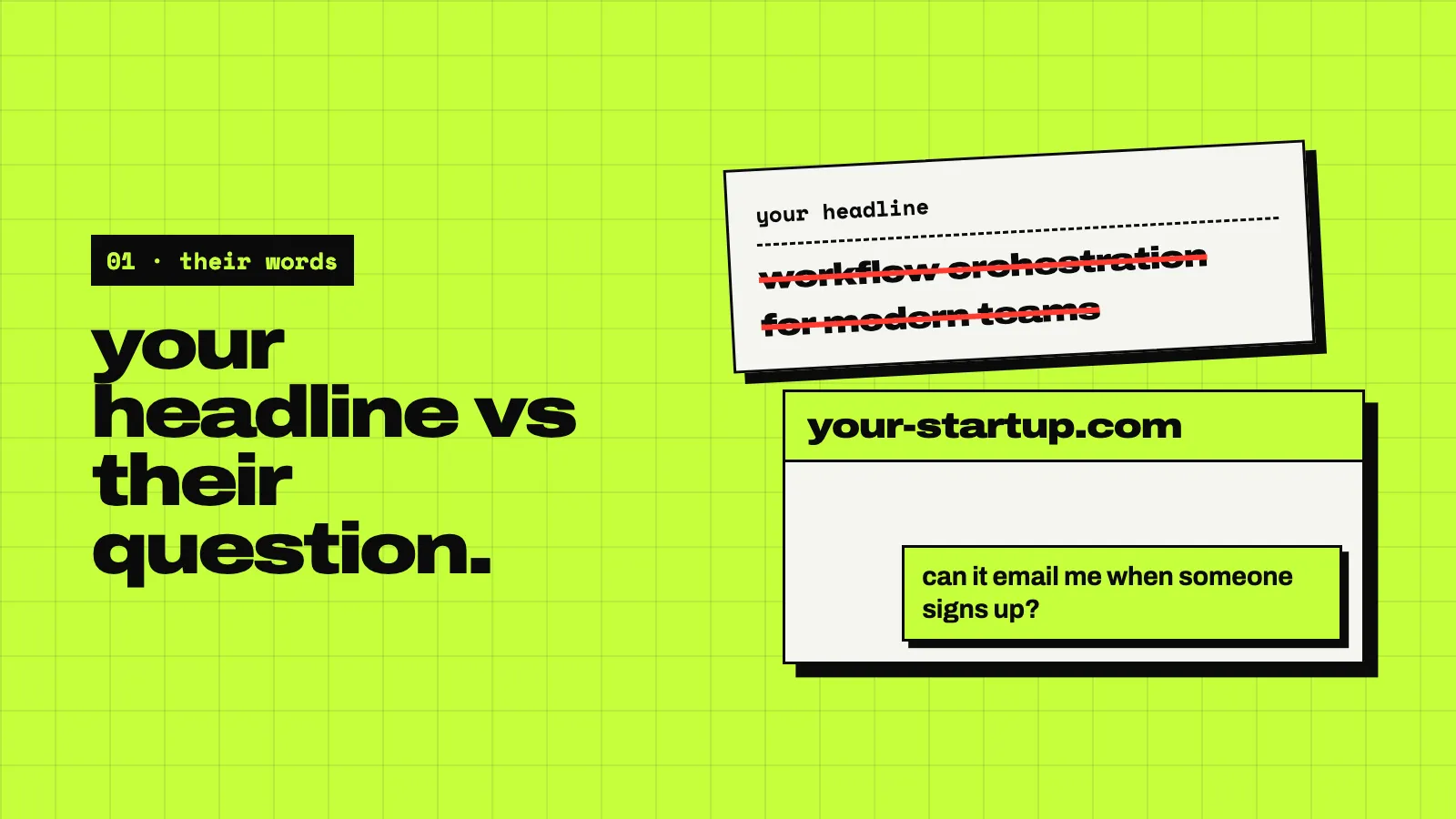
Builders write headlines about what they built. “Workflow orchestration for modern teams.” It’s accurate, and nobody has ever typed those words into a search box or a chat.
Your visitors write about what they want. “Can it email me when someone signs up?” “Does this work if I’m on Shopify?” That’s the language people use when they have money and a problem. It’s also the language they’ll recognise on your page.
The gap between the two is why a page can be correct and still not sell.
how to mine the log
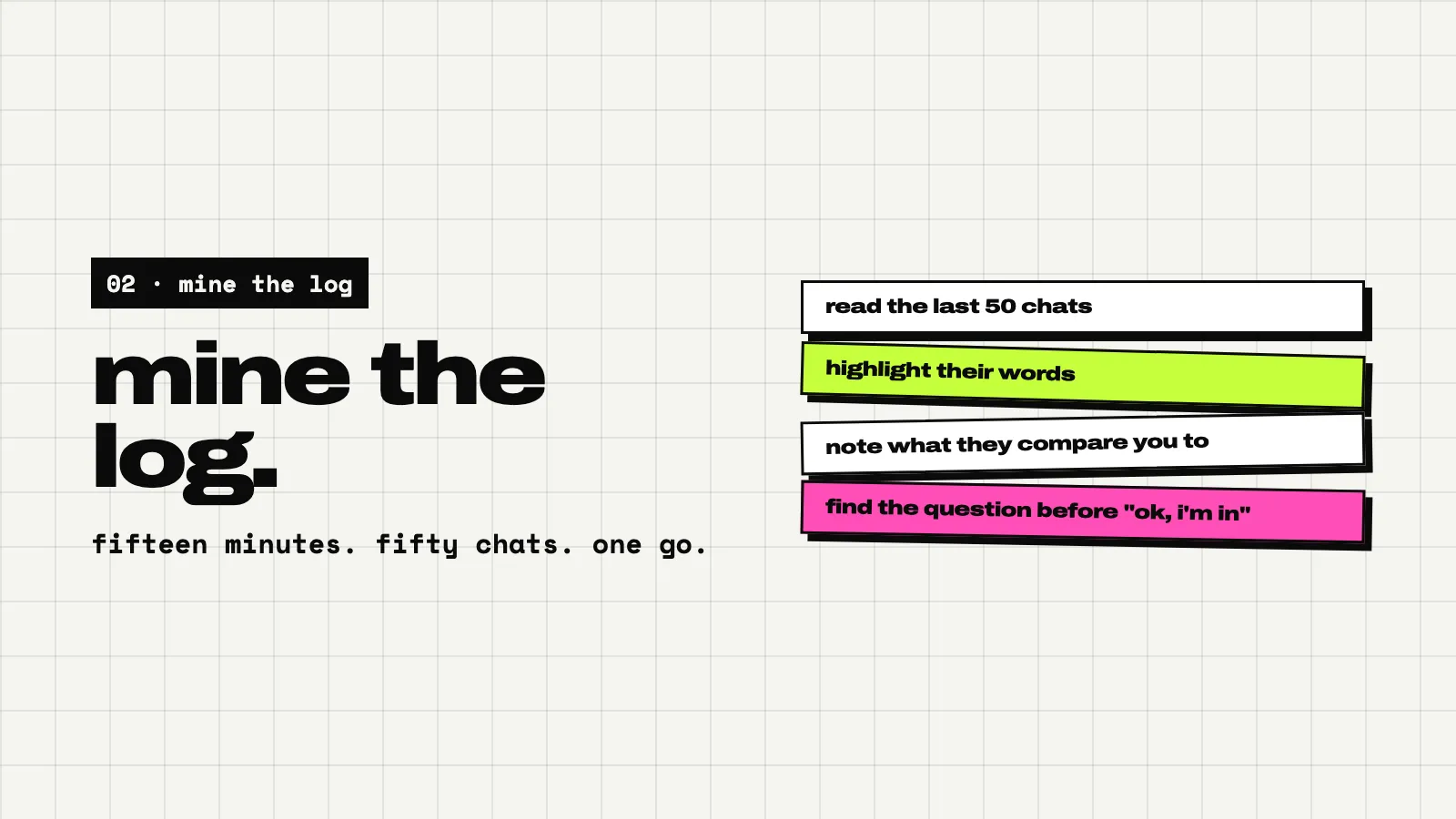
Set aside fifteen minutes. Open your last fifty conversations and read them in one go, not one by one as they came in.
- Highlight their nouns and verbs. Not yours. If three people say “customers” and your page says “end users”, your page is wrong.
- Note what they compare you to. “Is this like X?” tells you what shelf you’re on in their head.
- Find the question right before “ok, I’m in”. That’s the last doubt before a sale. It belongs next to your buy button.
- Mark the question that surprised you. That’s where the page leaves a gap you didn’t know about.
three places it goes
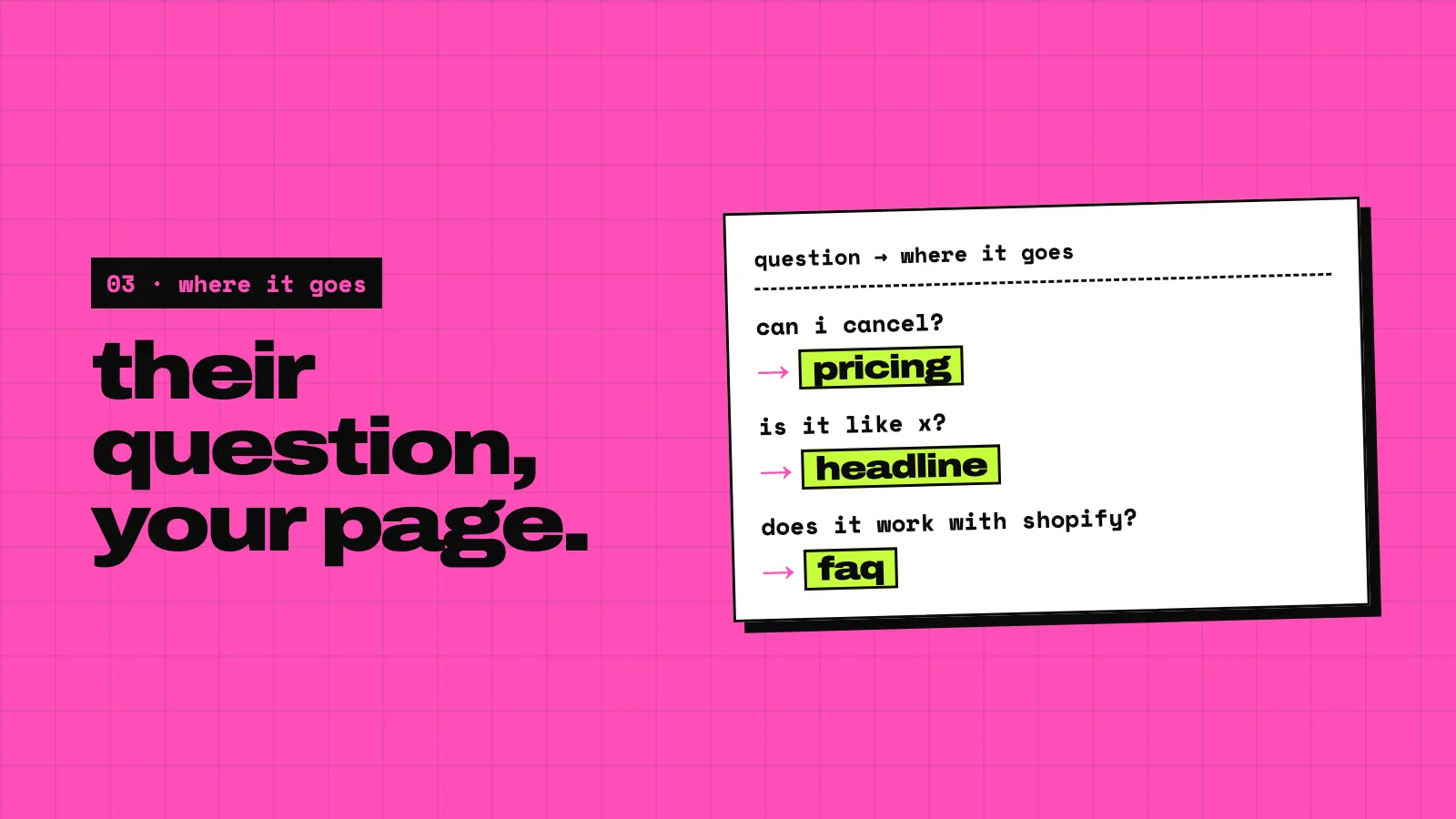
The headline. Take the problem people describe most and say it the way they say it. If they write “I miss messages from my site”, don’t write “unified omnichannel inbox”.
The FAQ. Use the real questions, word for word, as the questions. Answer each one in a sentence or two. A FAQ built from real chats answers what people ask, not what you hoped they’d ask.
The pricing page. The doubts people raise right before paying go next to the button. “Can I cancel anytime?” should be answered where they’re about to click, not three pages away.
the question that repeats is a bug
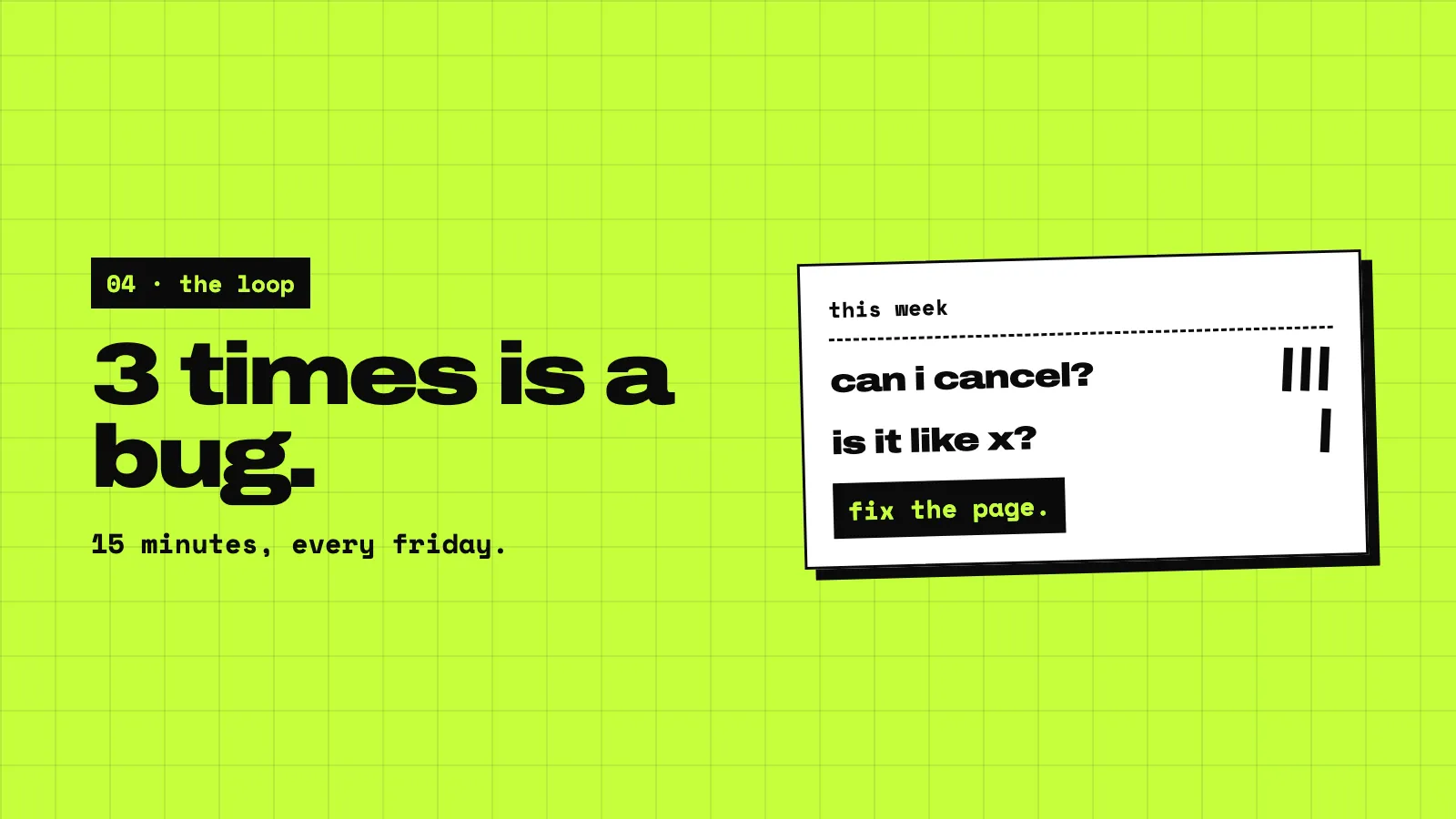
When the same question comes up three times, stop answering it and fix the page. Treat it like a bug report, because that’s what it is: the page failed to explain something, three times in a row.
Fixing it doesn’t mean fewer chats. It means better ones. The easy questions disappear and the interesting ones show up: the edge cases, the bigger deals, the “could it also do this?”.
keep the loop running
Put fifteen minutes in your calendar every Friday. Read the week’s chats. Move one answer onto the page. That’s a small change every week, and after two months your page is written by the people who buy from you.
where the log comes from
Spookat puts every conversation in one place: our inbox and its phone app, plus a thread in Slack or Discord if that’s where your team answers. You can export all of it whenever you want to read a month in one go.
It’s $4.99 a site a month, with 14 days of cool guy and no card. If you already answer people in a contact form, you know why a chat log is easier to read than an inbox of forms.
Next weekend: what “too expensive” usually means.