every question is a buying signal
Nobody asks about a thing they don’t want. A question on your site is the loudest signal you’ll ever get that someone is close to paying. Most small teams treat it like a support ticket instead. This is part two of our weekend series on selling when you’re small: what the usual questions mean, where they get lost, and how to answer one so it ends in a sale.
nobody asks about a thing they don’t want
Think about the last time you asked a shop something. You didn’t ask about the toaster you’d never buy. You asked about the one in your hand.
Your visitors work the same way. The ones who don’t care never write. They scroll, shrug and leave. The ones who write have already done the work: they read the page, liked something, and hit one thing that stops them from paying.
That one thing is the question. Answer it and the path to the checkout is clear again.
the questions, decoded
Most questions on a small product’s site fall into a handful of kinds. Each one tells you how close the person is.
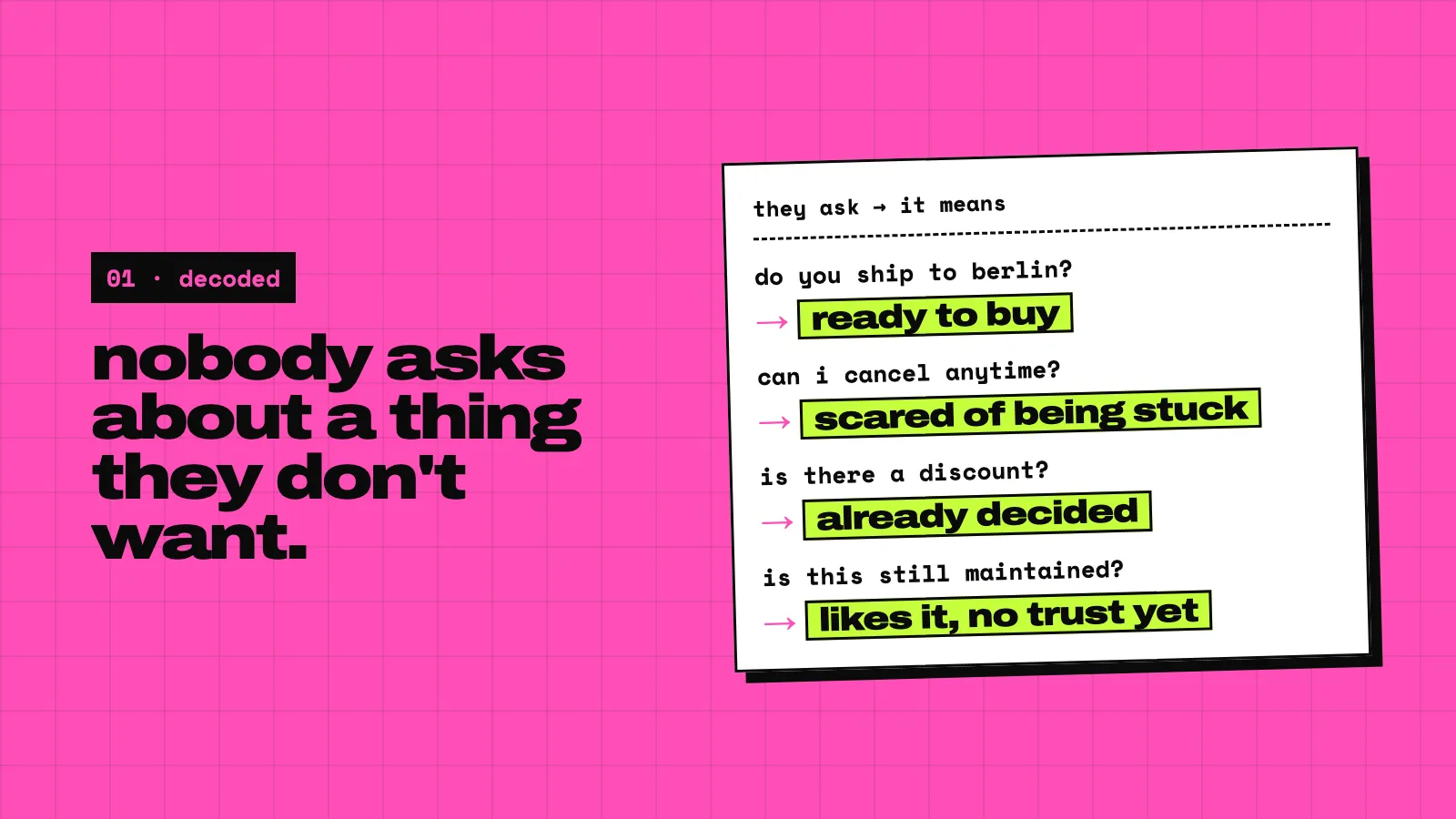
- “Do you ship to Berlin?” They’ve decided they want it. They’re checking the last practical detail.
- “Can I cancel anytime?” They want to commit, and they’re scared of being stuck.
- “Does it work with my setup?” They’re comparing you with something else, and you’re still in the race.
- “Is there a discount?” They’ve decided. Now they’re haggling.
- “Is this still maintained?” They like it and don’t trust it yet.
None of those people are browsing. All of them are one answer away.
where the signal gets lost
Most sites are built to keep questions away from people. Not on purpose. It just happens.
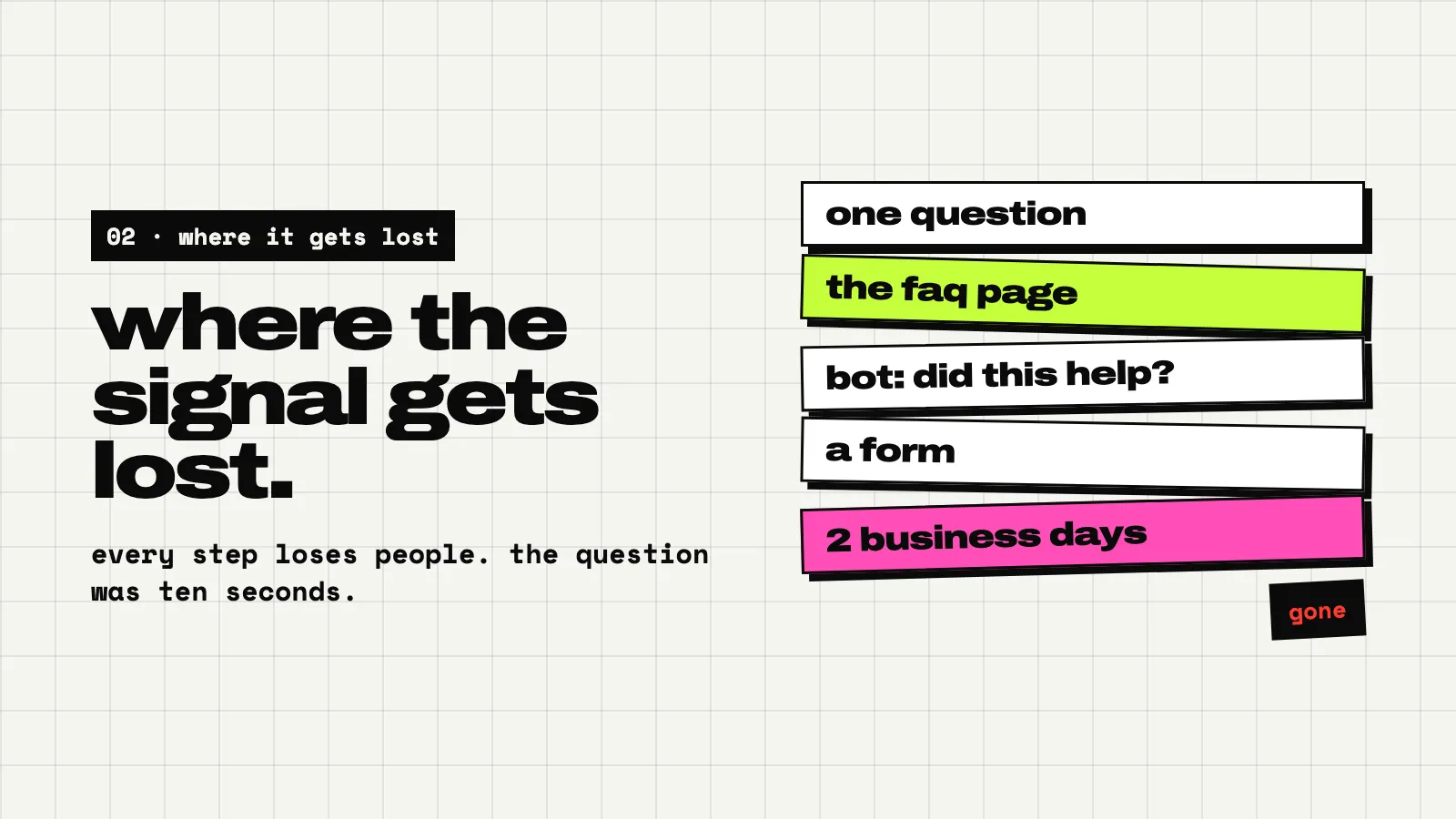
The FAQ page answers the questions you wished people had, not the ones they have. A bot asks “did this help?” three times and then offers a link to the FAQ. The contact form swallows the question and promises a reply within two business days. The “book a demo” button asks for a 30-minute call to answer a ten-second question.
Every one of those steps loses people. The signal was there, and it went nowhere.
how to answer a buying signal
Three rules. They work in chat, email and in person.
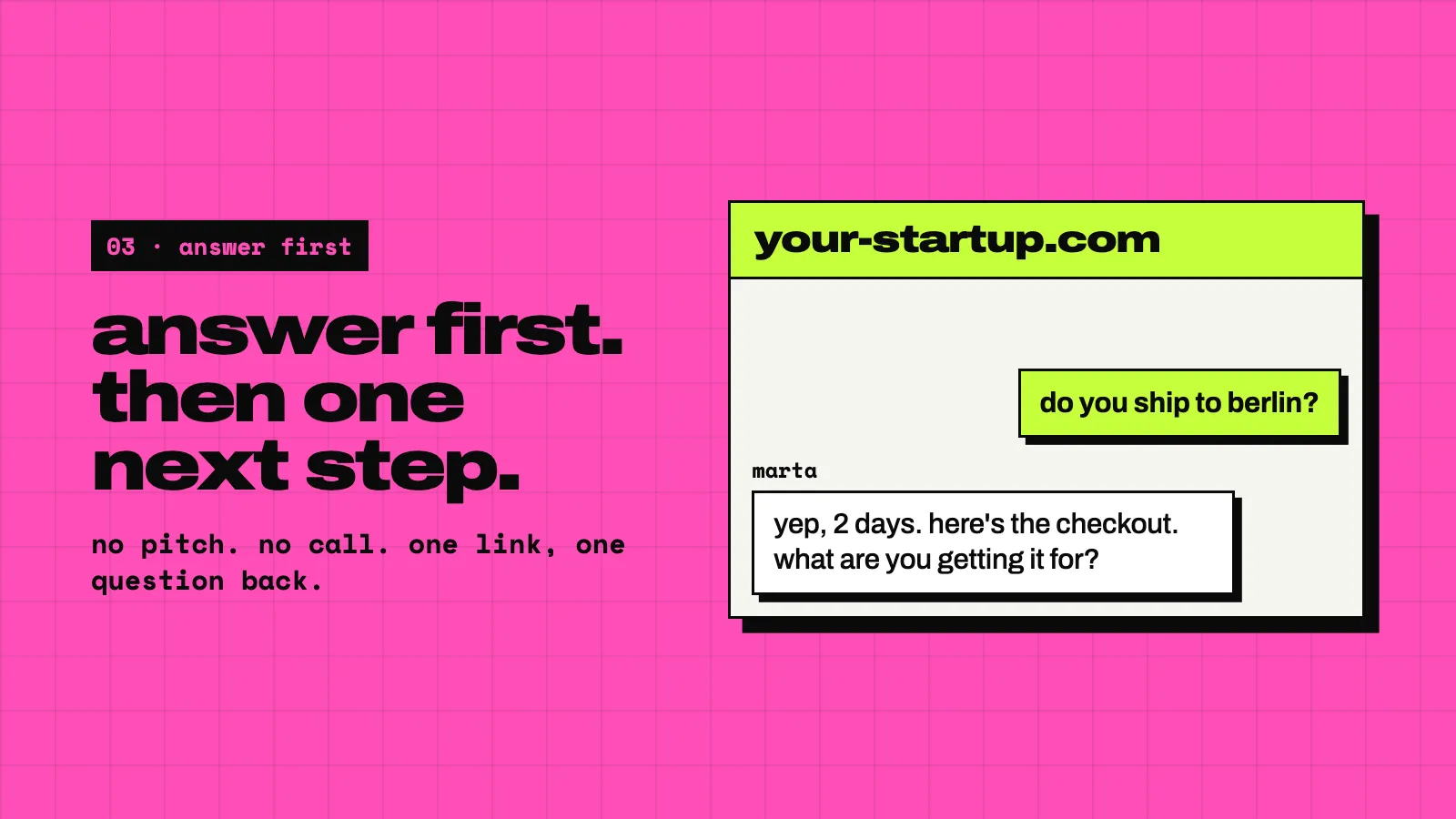
Answer the question first. Not a greeting paragraph, not a pitch. “Yes, we ship to Berlin, two days.” If the answer is no, say no, and say what you can do instead.
Then offer one next step. A link to the right plan, the setup guide, or “want me to set it up with you?”. One. Not a menu.
Ask one thing back. “What are you building?” gives you the context to help, and it turns a visitor into a conversation.
That’s it. No discount unless they asked for one, no seven-paragraph sales email, no “let’s hop on a call” for something a sentence can answer.
count them
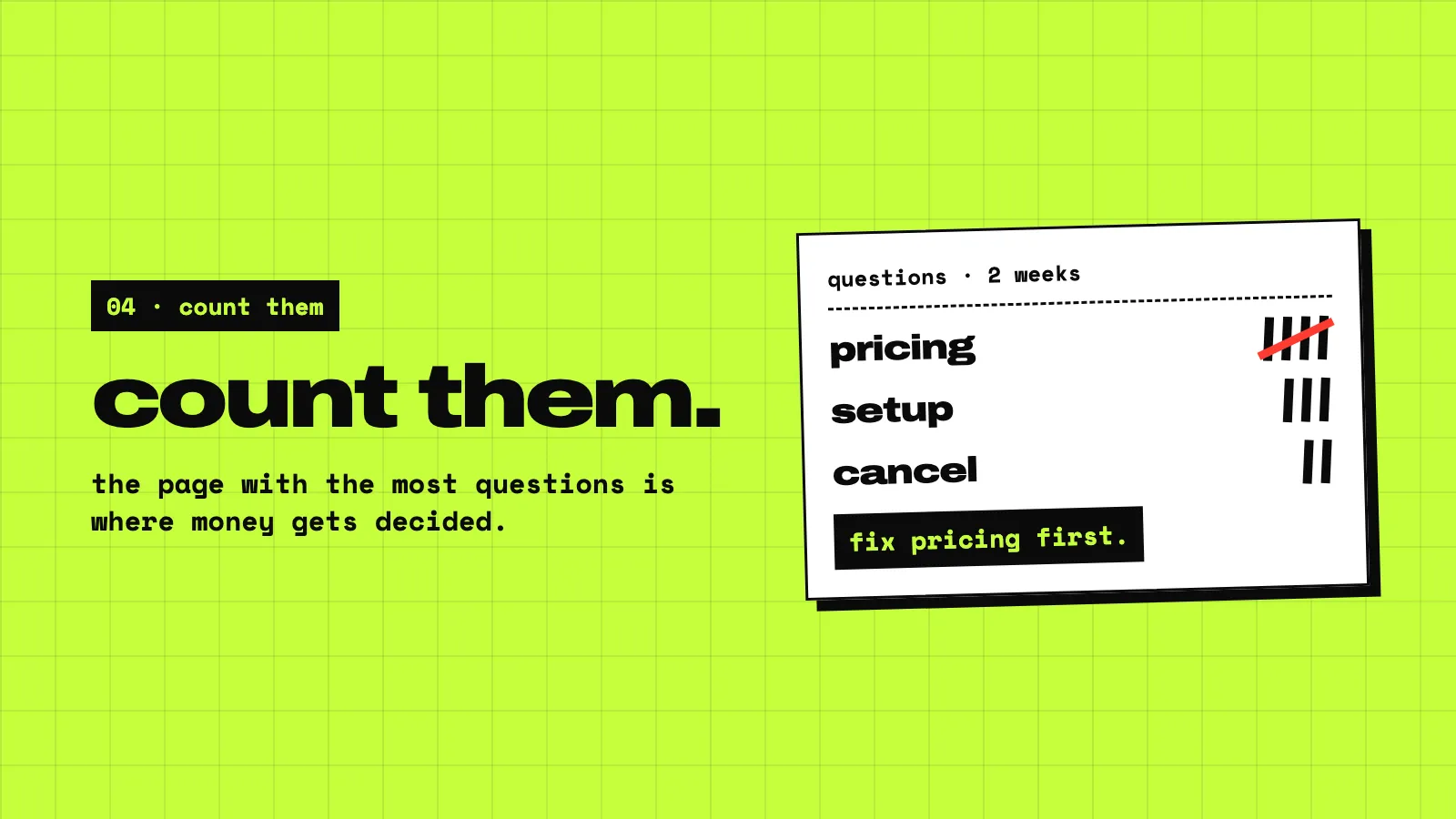
Keep a tally. Nothing fancy: a note with the question and the page it came from.
After two weeks you’ll see a pattern. One page will produce most of the questions. Usually it’s pricing, sometimes it’s the page for your main feature. That’s the page where money is being decided, and it’s the one to fix first.
Then fix it. Put the answer to the top question on that page, in the words people used to ask it. The next person doesn’t have to ask, and you get your time back for the question after that.
what we built for it
Spookat is a small chat that sits on every page of your site. A visitor asks, and you answer in a Slack or Discord thread, or in our inbox and its phone app, while they’re still on the page. If they leave, the reply waits for them.
Every question lands in one place, so the tally takes care of itself. It’s $4.99 a site a month, with 14 days to try it and no card. See how it works.
Next weekend: why the “book a demo” button is costing you the small deals.